Anthropologist
Writer. Researcher. Teacher.
Mwandishi. Mtafiti. Mwalimu.
What does it mean to heal?
For more than two decades, I have explored this question in Tanzania, where my mentors and colleagues have taught me to think of healing as a quality of life and health as a form of lushness—concepts that refuse to separate bodies from lands, medicine from agriculture, or care from justice. These lessons shape my work even when collaborations draw me elsewhere, such as when I am pulled to think closer to home in Ithaca, New York.
My research, writing, and teaching are rooted in the conviction that struggles over health are simultaneously struggles over land relations, knowledge systems, and the possibilities of collective life. I am concerned with the politics of knowledge, questions of evidence, and possibilities of care. I have explored these concerns through interlocking issues: the power for African healing, the science of traditional medicine, the afterlives of botanical colonization, the problem of toxicity, the politics of intellectual property, questions of bodily and territorial sovereignty, the work of chronicity and the rise of chronic disease, and the possibilities of gardens as therapeutic interventions.
Currently, I am exploring how anthropology might fuel experiments in healing (as) land relations. I co-founded the Uzima Collective, which brings together diverse scholars, medical professionals, and community leaders from both Tanzania and the United States to reimagine healing in the face of intertwined environmental and health challenges. At the heart of this work is a two-acre anticolonial teaching, research, and healing garden at Kilimanjaro Christian Medical Center—a space for medical training, patient care, and collective repletion, inspiration, and healing. In an interlinked project with the Tanzanian non-governmental organization TRMEGA (Training, Research, Monitoring and Evaluation on Gender and AIDS), I am exploring what it means to “eat well” amid rising rates of chronic disease, climate change, expanding social inequality, and the intensification of property regimes that support the enclosure of land and plant life.
I’m always interested to learn about plants and humans who are troubling the body-land relations which inhere in histories of dispossession and inequality by enacting alternative modes of existence and forms of liveliness. I welcome collaborations with scholars, artists, health professionals, growers, and activists imagining and enacting more just, more lush possibilities for collective survival.
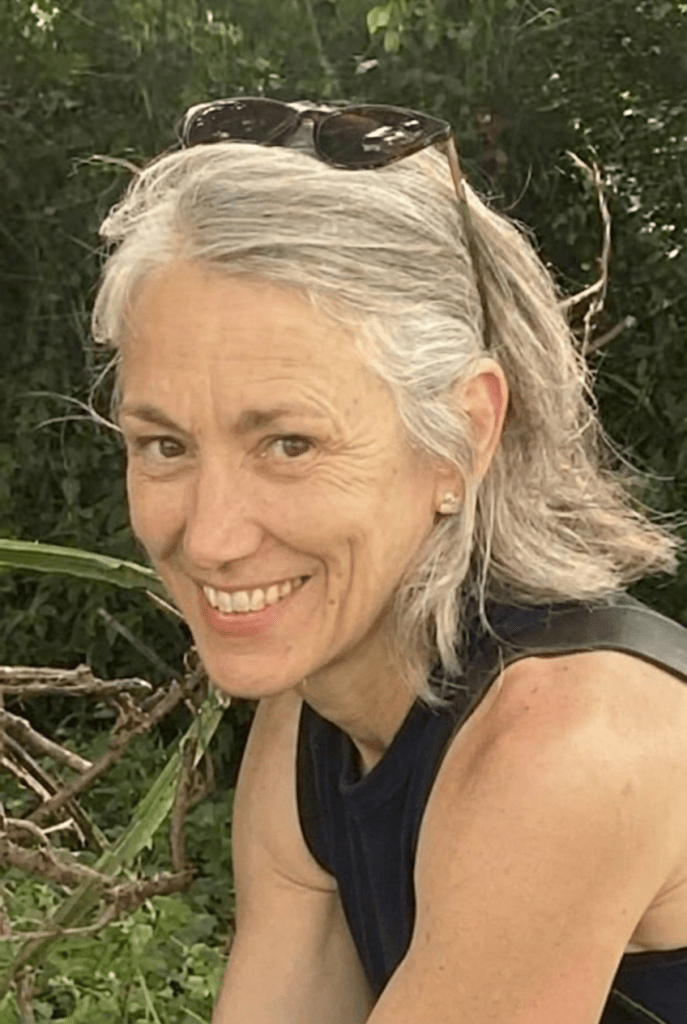
 Stacey Langwick